

Top UNESCO Heritage Sites in Pakistan: Complete Guide to All 6
Top UNESCO Heritage Sites in Pakistan: Complete Guide to All 6
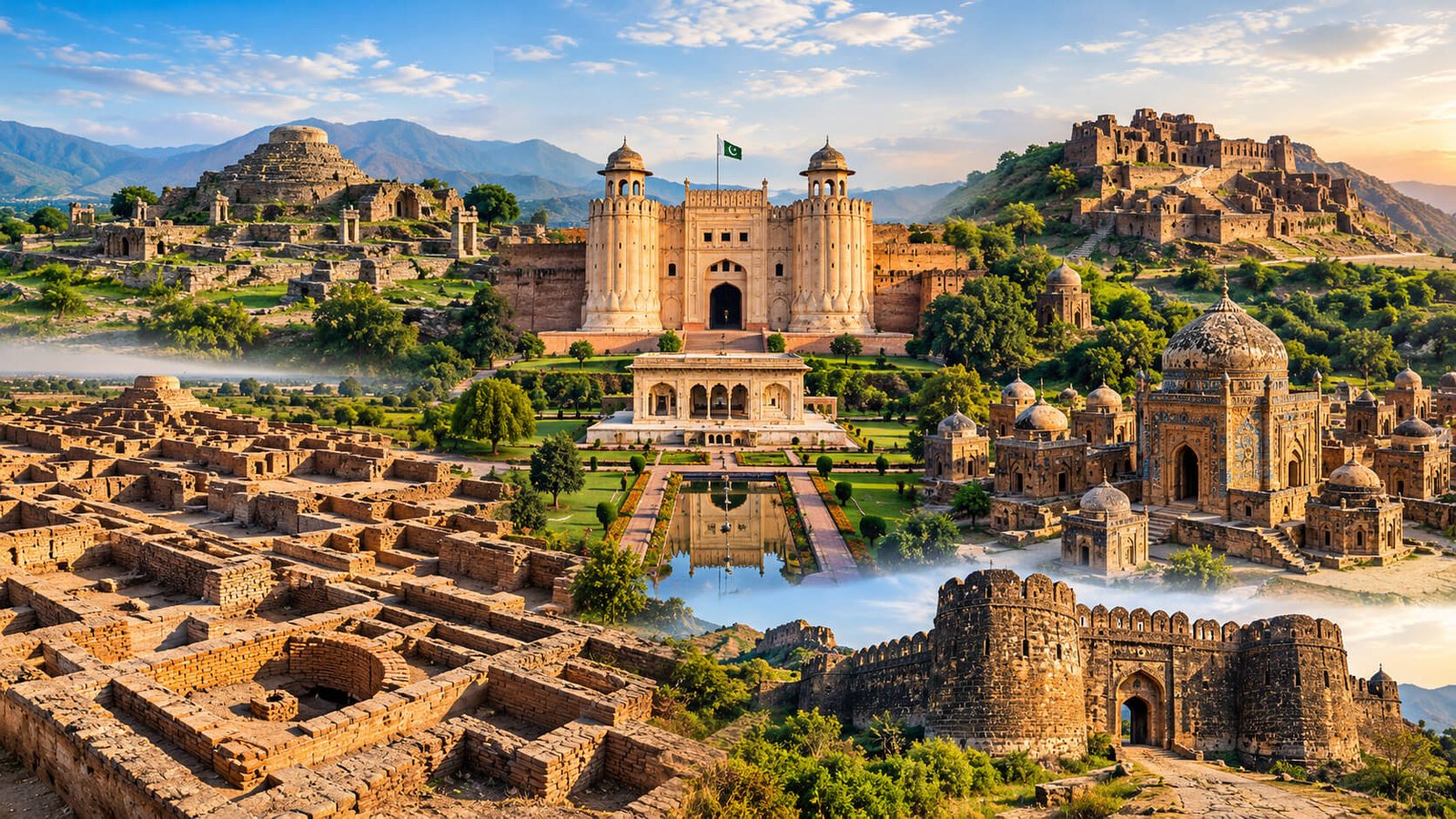
Which places in Pakistan actually made it onto the world’s heritage map? Good question. But you’re in the right spot. Here are the top UNESCO heritage sites in Pakistan, all six of them. Then we’ll cover each site’s history, location, and best features. So whether you’re planning a trip or a school project, you’ll get a clear answer here.
What Are the UNESCO World Heritage Sites in Pakistan?
Pakistan has six UNESCO World Heritage Sites, and every one of them is cultural. Still, they cover a lot of ground, from an Indus Valley city to a Mughal garden. Three were listed in 1980, two in 1981, and one in 1997. Since then, nothing new has joined, so these six are still the full set today.
| Site | Province | Inscribed | Era | Best known for |
|---|---|---|---|---|
| Mohenjo-daro (Archaeological Ruins at Moenjodaro) | Sindh | 1980 | About 2500 BCE | Planned Indus Valley city |
| Taxila | Punjab | 1980 | 5th century BCE to 2nd century CE | Buddhist learning centre |
| Takht-i-Bahi and Sahr-i-Bahlol | Khyber Pakhtunkhwa | 1980 | Early 1st century CE | Hilltop Buddhist monastery |
| Lahore Fort and Shalimar Gardens | Punjab | 1981 | 16th and 17th centuries | Mughal fort and gardens |
| Makli Necropolis (Thatta) | Sindh | 1981 | 14th to 18th centuries | Tombs and tile work |
| Rohtas Fort | Punjab | 1997 | Built from 1541 | Sher Shah Suri’s giant fort |
Quick reality check here. In 2026, Pakistan’s Tentative List grew to 37 properties, with 12 new additions. That sounds big, but it’s only a waiting list. Before a place joins the main list, it needs nomination, expert review, and a committee decision. So those new names aren’t UNESCO sites yet. Meanwhile, the official count stays at six.
What Is the History of Mohenjo-daro?
Mohenjo-daro sits in Sindh’s Larkana District, right beside the Indus River. Because it was built around 2500 BCE, it ranks among the largest settlements of the Indus Valley Civilisation. Also, UNESCO lists it as Archaeological Ruins at Moenjodaro. It was inscribed in 1980. Still, it remains one of the top UNESCO heritage sites in Pakistan for ancient ruins.
Why Was This Ancient City So Advanced?
Mohenjo-daro was surprisingly well planned. Its streets followed a strict grid, and builders used baked bricks. Overall, that’s a lot of planning for a city this old. Later, a Buddhist stupa was built over the ruins in the 2nd century CE. Excavations began in 1922, but only about one third of the city has been explored. Here are the features that stand out most:
- Public baths
- A granary
- An elaborate drainage system
Is Mohenjo-daro at Risk Today?
Yes, weather is a real threat. Sindh’s authorities told UNESCO the 2022 monsoon badly affected the ruins. It was the worst in over 100 years. So if you plan a visit, check the weather and local access first. Also, stay on marked paths, because the old brick walls are fragile.
What Makes Taxila’s Archaeological Sites So Special?
Taxila lies in Punjab’s Rawalpindi District. It was a major Buddhist learning centre from the 5th century BCE to the 2nd century CE. The site holds the remains of four settlements, so you can trace a city’s growth over time. It also sat on a branch of the Silk Road, so Persian and Greek influences shaped it. Meanwhile, the Bhir Mound is linked to Alexander the Great’s arrival in 326 BCE.
Look out for these monuments when you visit:
- Dharmarajika Stupa
- Jaulian monastery
- Mohra Muradu stupa
- Sirkap city remains
- Jandial complex
Taxila is one of the top UNESCO heritage sites in Pakistan for Buddhist history. In addition, it was inscribed in 1980. Still, it’s a group of separate archaeological sites, not a single ruin. So plan to visit a few spots, not just one. If you enjoy ancient ruins and quiet walks, it’s an easy half-day stop.
Why Is Takht-i-Bahi One of Pakistan’s Buddhist Heritage Sites?
Takht-i-Bahi is a Buddhist monastery in Khyber Pakhtunkhwa. It was founded in the early 1st century CE. Also, its name means “Throne of Origins.” That steep hilltop saved it. As a result, the site escaped repeated invasions and stayed unusually well preserved. Overall, it’s described as the most complete Buddhist monastery in Pakistan.
Nearby lie the remains of Sahr-i-Bahlol, a small fortified city from the same era. In fact, they’re among the most important Buddhist sites in the Gandhara region. Altogether, both rank among the top UNESCO heritage sites in Pakistan for Gandhara heritage. UNESCO listed them together in 1980, so you can see both on one trip.
Which Mughal Heritage Sites in Pakistan Are on the UNESCO List?
Lahore has two Mughal sites, but UNESCO lists them as one property. The official name is the Fort and Shalamar Gardens in Lahore, though most people write “Shalimar.” The Lahore Fort sits at the northwest corner of the Walled City. However, it was destroyed and rebuilt several times. Still, the monuments you see today date from the 16th century, under Akbar.
The Shalimar Gardens came later, built under Shah Jahan in 1642. They also show how Persian and Islamic garden ideas shaped Mughal design. Both were listed in 1981. They sit high among the top UNESCO heritage sites in Pakistan for Mughal art. Finally, you can read the official UNESCO listing for details.
What Is the History of the Makli Necropolis?
Makli is a huge necropolis near Thatta in Sindh. Because it was in use between the 14th and 18th centuries, it holds many layers of history. The tombs use stone, brick, and glazed tiles. You’ll also find the graves of saints and rulers, including Jam Nizamuddin II and Isa Khan. Generally, the style blends Mughal architecture with local touches. UNESCO inscribed it in 1981 as Historical Monuments at Makli, Thatta.
What Is the History of Rohtas Fort?
Rohtas Fort stands near Jhelum in Punjab. Sher Shah Suri began building it in 1541, after defeating the Mughal emperor Humayun. The walls run more than four kilometres around, with 68 bastions and 12 monumental gateways. Furthermore, stepped wells called baolis gave the garrison its own water supply. UNESCO calls it an exceptional example of early Muslim military architecture. It was never taken by storm, so it remains intact today. Finally, it’s also the newest UNESCO site in Pakistan, listed in 1997.
Which of the Top UNESCO Heritage Sites in Pakistan Should You Visit First?
Pick by interest, not by fame. So this table makes the choice easier. Each row matches a travel style with the best site to start with, plus its province. Because the six sites sit in three provinces, a single trip rarely covers all of them. After that, you can add more stops as time allows.
| If you love... | Try this site | Province |
|---|---|---|
| Ancient cities | Mohenjo-daro | Sindh |
| Buddhist history | Takht-i-Bahi or Taxila | Khyber Pakhtunkhwa or Punjab |
| Mughal art and gardens | Lahore Fort and Shalimar Gardens | Punjab |
| Tomb art and tile work | Makli Necropolis | Sindh |
| Military architecture | Rohtas Fort | Punjab |
Before you travel, keep these tips in mind:
- Check opening hours, access, and weather with local tourism offices.
- Stay on marked paths.
- Don’t climb on ruins, because these places are fragile.
Are Badshahi Mosque and Derawar Fort UNESCO Sites?
Not yet. Both are famous, but neither is on the World Heritage List. They’ve appeared on Pakistan’s Tentative List, which is the first step before a formal nomination. Still, Derawar Fort has a long past. Sources date it to the 9th century, and its 40 round bastions rise up to 30 metres. Later, the Nawabs of Bahawalpur used it as a home until the 1970s.
Related Keywords & Topics (LSI Section)
Many travellers search for historical places in Pakistan, archaeological sites in Pakistan, or Pakistan’s cultural heritage. But the goal is always the same: a clear list with real stories. Also, conservation work sits behind every site. UNESCO notes that inscription brings a duty to protect a site long term. As a result, heritage conservation in Pakistan and cultural tourism go hand in hand.
FAQs
What are the UNESCO World Heritage Sites in Pakistan?
Pakistan has six: Moenjodaro, Taxila, Takht-i-Bahi, Lahore Fort and Shalamar Gardens, Makli (Thatta), and Rohtas Fort.
Which UNESCO site in Pakistan is the newest?
Rohtas Fort, inscribed in 1997, is still the newest addition.
Is Badshahi Mosque a UNESCO World Heritage Site?
No. It has appeared on Pakistan’s Tentative List, but it isn’t inscribed.
Is Derawar Fort a UNESCO World Heritage Site?
Not yet. Derawar and the Desert Forts of Cholistan are on the Tentative List.
Are the 2026 Tentative List additions UNESCO sites?
No. A Tentative List is a waiting list. A place becomes a UNESCO site only after nomination and inscription.
Conclusion
The top UNESCO heritage sites in Pakistan cover about 4,500 years of history, from Indus cities to Mughal gardens. In short, whether you love ruins, Buddhist art, or fort walls, there’s a site for you. My advice? Start with the table above and pick the one that matches your interests. Then double-check access before you go. The Tentative List keeps growing, so this story isn’t finished.
Comments (0)
Be the first to comment.